
What is phishing?

Phishing attacks occur when a cybercriminal sends a fake message that appears to come from a trusted source. Email is the most used method of communication for this motive. The purpose is to steal sensitive information such as credit cards, login information or infect a victim’s computer with malware. Phishing is a frequent sort of cyberattack that everyone should be aware of to stay safe online.
Be aware of phishing in the form of emails or phone calls

A recent increase in cyber security trends last year indicates that phishing schemes are more dangerous and prevalent than ever. In a phishing scheme attempt, the cybercriminal disguises himself or herself as someone other than the sender to deceive the victim into divulging credentials, clicking a malicious link, or opening an attachment that infects the user’s system with malware, trojan, or a zero-day vulnerability exploit.
This frequently results in a ransomware attack.
Next steps

Prevention is the best defence. Take the follow pre-emptive steps to protect yourself from an online cyber attack. Where prevention fails, use detection, and where detection fails, you must be able to recover from the incident.
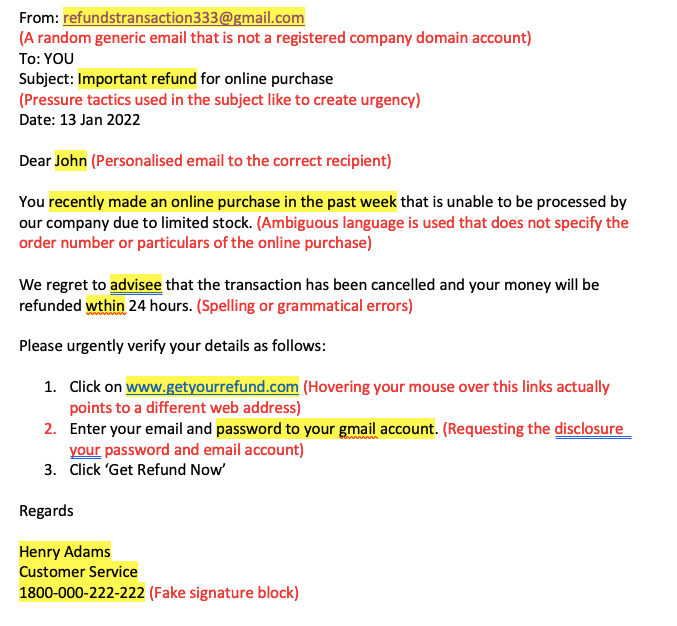
Below is an example of a phishing message which highlights a set of indicators to consider when assessing a suspicious email.
- Read or frame emails using the context in which the communication was received. Were you expecting any email correspondence from the recipient or company? If no, delete the email immediately!
- Pay attention to the details in the email’s content. Can you identify any of the indicators? E.g. Spelling errors, general statements or random email addresses.
- Hover over a link to identify whether it will take you to a safe and legitimate website.
Monitor

To ensure that you do not fall victim to this attack, monitor your digital environment and note of the following security tips.
- Do not open emails from someone you do not know.
- Do not open documents or click on links contained in a suspected phishing email.
- Be cautious about the contents of an email, even though it is sent by a trusted friend or contact. Malicious URLs can be passed on by friend’s who are affected by phishing scheme.
- If you didn’t request an email, do not click on it!

 Cybericonic